Biocracked
←

#urolithin d

1 article
Approach 4, conceptual metaphor, in palette D, bold color field.

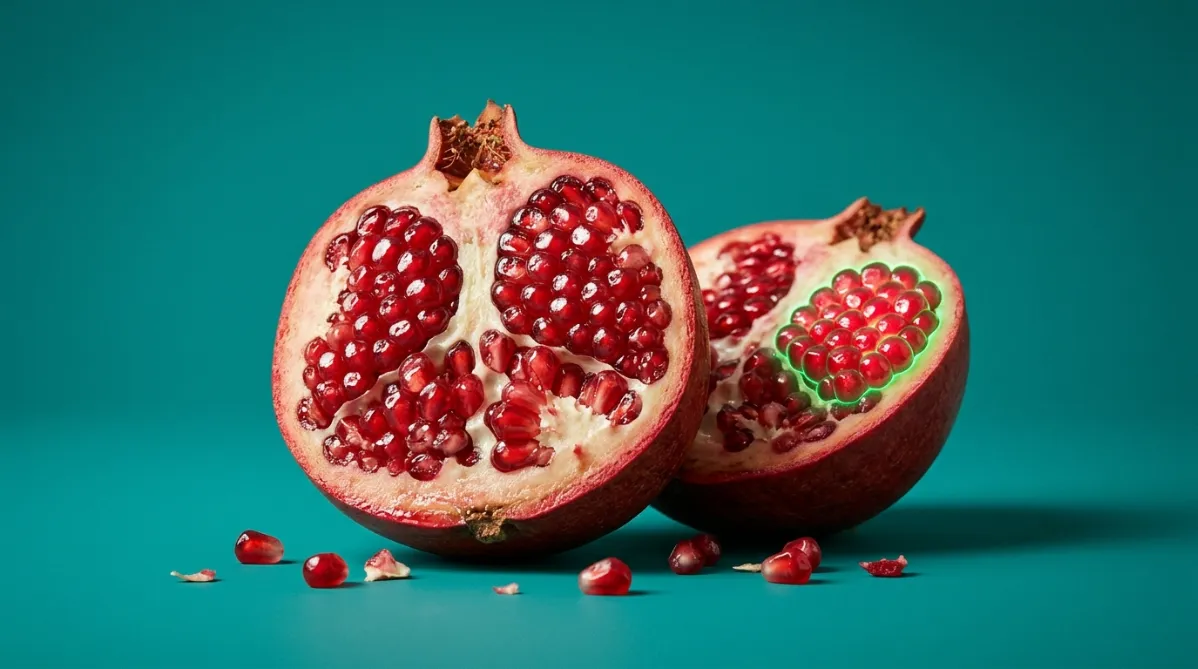
A single pomegranate, split open, sits at the center of a saturated teal backdrop. It is photographed from a slightly high three-quarter angle with a macro lens. One half is pulled slightly forward and the other stays behind it, which hints at two close siblings. The ruby arils are glossy and densely packed. In the smaller half, a few arils glow with a subtle electric green rim light, as if one has been singled out. Pomegranate is a natural source of the precursors that gut bacteria convert into urolithins. Soft, large-source studio light comes from the upper left. It casts crisp, clean shadows on a seamless teal surface and gives the red fruit sharp specular highlights. A few arils are scattered nearby. The mood is curious, vivid and quietly scientific, with a strong red-against-teal contrast and no text.
longevity

Уролитин D — малоизвестный «брат» уролитина A, защищающий память у мышей

BY NOVA CHEN ·

Уролитин A привлекает всё внимание, но его менее известный «брат» — уролитин D — недавно продемонстрировал защитный эффект для мозга у стареющих мышей. В модели старения, индуцированной D‑галактозой, пероральный приём уролитина D улучшил показатели памяти и снизил повреждения гиппокампа, при этом задействовались сигнальные пути AMPK, PGC‑1α и SIRT3, а также маркеры митофагии. Клеточные эксперименты показали, что блокировка AMPK или PGC‑1α полностью устраняет эффект. Однако модель химически индуцирована, данных у людей нет, и исследование не сравнивало уролитин D с уролитином A. Ниже — что это значит, откуда берутся уролитины и какие шаги стоит (и не стоит) предпринимать сейчас.

This page is available in